Task Triage Masterclass: Turn an Overwhelming To-Do List into a Calm Action Plan in 15 Minutes
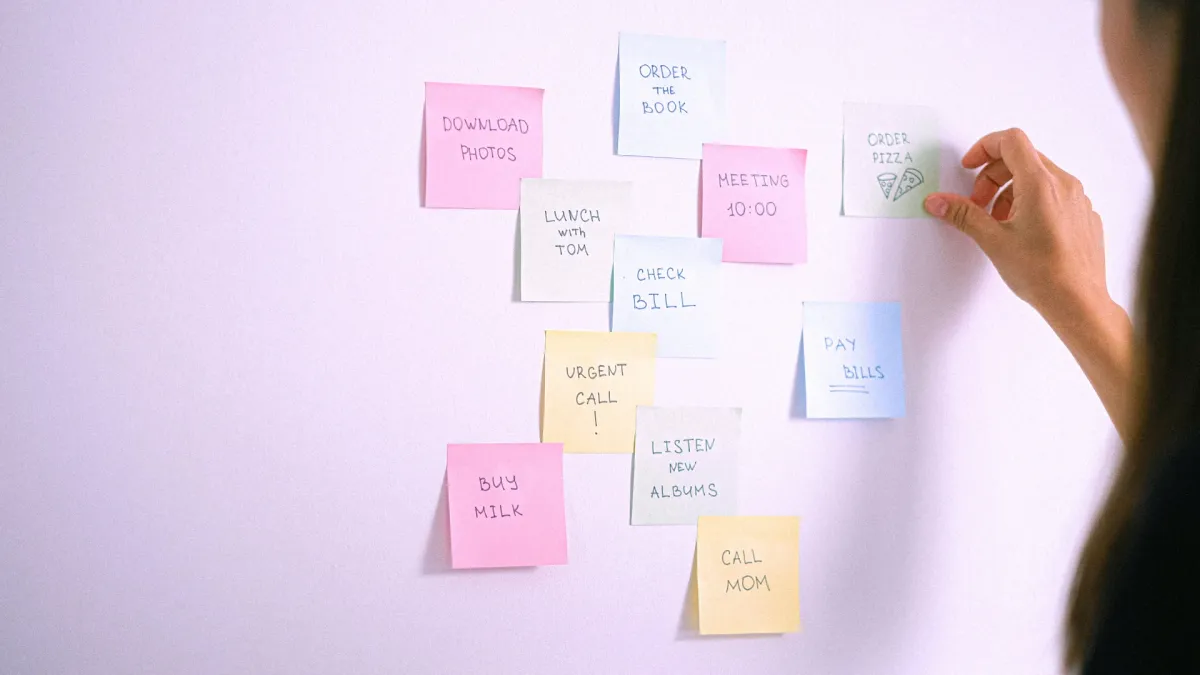
A long to-do list isn’t just a collection of actions. It’s a collection of open loops. Each open loop quietly demands attention: “Don’t forget me.” When there are too many, your mind does what it’s designed to do under threat; it scans for danger.
That’s why you can be highly competent and still feel frozen. Your brain isn’t failing at productivity. It’s trying to protect you from uncertainty, consequences, and the feeling of not being able to keep up.
This is also why “just pick something” is bad advice when you’re overwhelmed. Your brain can’t pick because it’s trying to pick the safest option; one with the lowest risk of regret, judgment, or failure. So it stalls. Or it chooses a small, easy task because quick completion gives you a shot of relief.
Task triage works because it separates the emotional weight from the decision-making. It gives your brain a structure: first we sort, then we choose, then we start.
The task triage method (in one sentence)
Capture everything, sort by urgency and impact, then build a tiny “today plan” you can actually execute; starting immediately.
You’re not trying to “finish the list.” You’re trying to restore clarity and control.
The 15-minute triage (step by step)
Minute 1: Reset your state before you touch the list
Overwhelm lies. It tells you everything is urgent and you’re already failing.
Before you plan, soften the stress response just enough to think clearly. Drop your shoulders. Exhale slowly. Let your jaw unclench.
If you like a structured reset, a quick minute of Box Breathing works well here; but the real goal is simple: get out of emergency mode.
You’re not being dramatic. You’re being strategic. Calm brains prioritize better.
Minutes 2–5: Capture everything into one place
This is the part people skip because it feels too simple. It’s also the part that changes everything.
Get tasks out of your head and into one place. Notes, texts, sticky notes, “I should…” thoughts—dump them all.
No organizing yet. No prioritizing yet. Just capture.
If you use Conqur, this step maps cleanly to the To-Do List. Think of it as your “inbox”—a container where tasks live so your brain doesn’t have to hold them.
Capturing is relief. It tells your mind, “You don’t have to remember everything.”
Minutes 6–9: Sort fast into four buckets (no overthinking)
Now you’re going to triage like a professional: quickly, imperfectly, and based on reality.
Create four buckets:
- Urgent: real deadline or consequence soon
- Important: meaningful, high impact, but not due today
- Quick wins: small tasks that remove friction or mental load
- Not yours / Not now: delegate, delete, defer
Here’s the trick: be strict with “urgent.” Most tasks feel urgent because they’re loud. Urgent is what breaks something if ignored in the next 24–72 hours.
Everything else goes to important, quick, or not now.
If you can’t decide where something goes, default it to Important. The goal is to stop your brain from treating your entire life like an emergency.
Minutes 10–12: Build your calm “today plan” (three lanes only)
This is where the magic happens—and where most people sabotage themselves.
Your “today plan” needs to fit in your real life, not your fantasy life.
Use three lanes:
One Anchor Task
This is the task that will reduce the most pressure or create the most meaningful progress. If you only do this today, you still feel proud.
Two Support Tasks
These are maintenance actions that keep life from piling up: small admin, replies, scheduling, basic household needs.
One Quick Win (optional)
A tiny task under 10 minutes that closes an open loop and makes your brain feel safer.
This structure works because it keeps your day human-sized. It prevents the common pattern of doing ten small things and still feeling like nothing mattered.
If you want your “today plan” surfaced from your larger list without staring at everything, the Prioritizer can help you keep the focus list short and digestible. The goal isn’t to track more. It’s to decide less.
Minutes 13–15: Time-box the Anchor Task and start immediately
Here’s the rule that turns triage into results:
You start the anchor task before you close your list.
Otherwise, triage becomes another way to avoid the work.
Give your anchor task one focused sprint—10, 15, or 25 minutes. You’re not promising to finish it. You’re promising to begin.
If timers help you start, the Mental Flow Timer is a clean way to create a container for attention. The timer isn’t a productivity trick—it’s a boundary. It tells your brain there’s an end, which makes starting feel safer.
When the sprint ends, you reassess. Maybe you do another sprint. Maybe you stop. But you’ve already won the most important battle: initiation.
The difference between “urgent” and “important” (the part that changes your week)
If you’re constantly overwhelmed, it’s usually because your days are dominated by urgent tasks; fires, messages, last-minute fixes; while important tasks never get the time they deserve.
Urgent tasks shout. Important tasks whisper.
Urgent tasks come with immediate consequences. Important tasks come with delayed rewards.
Triage helps you protect important work by moving it into a visible “Next” list. Not “someday.” Next.
If your important task is big and fuzzy—something like “launch the project” or “get my life together”—it doesn’t belong on a flat to-do list. It needs to become a sequence.
That’s where a goal breakdown helps. In Conqur, you can turn a major project into step-by-step tasks in Pictogoal so it stops being one intimidating blob and becomes small wins you can actually complete.
Common triage traps (and how to avoid them)
The “everything is urgent” trap
If you have ten urgent tasks, you don’t have ten urgent tasks; you have a list that needs sorting.
Choose the two with the nearest real consequences. Move the rest to Important.
Your nervous system will protest. That’s normal. You’re breaking the habit of panic-prioritizing.
The “I did a lot but nothing mattered” trap
This happens when your day becomes an endless loop of quick wins. Quick wins feel good, but they can become avoidance.
That’s why the anchor task matters. It’s the one that changes your emotional load.
The “I planned perfectly but didn’t start” trap
Planning can be soothing because it gives you the illusion of control. Starting is what gives you the real thing.
Always end triage with a sprint.
What this looks like in real life
If your list is mostly life admin, your anchor task might be “pay the overdue bill” or “book the appointment.” Your support tasks might be “reply to one important message” and “prep something easy for dinner.” Your quick win might be “cancel the subscription” you’ve been meaning to cancel.
If your list is work-heavy, your anchor task might be “draft the outline” or “write the first section” of the thing you’re avoiding. Your support tasks might be “reply to two key emails” and “confirm the meeting time.” Your quick win might be “send the follow-up.”
If your list is emotionally heavy; tasks like calls, conversations, decisions; your anchor task might be the prep: “write the three points I need to say” or “draft the message.” You don’t have to force a hard conversation in one go. You just have to create motion toward it.
The calm truth: the goal is not to do more, it’s to feel less chased
Task triage is not about becoming a machine.
It’s about getting your mind back.
When you sort your list, choose a tiny plan, and begin immediately, something shifts. Your brain stops scanning for danger and starts scanning for progress. You feel calmer not because everything is done; but because you know what matters and you’re moving.
Try this once today. Set a timer for 15 minutes. Triage. Choose your anchor. Start the sprint.
That single sequence: sort, choose, begin; can turn an overwhelming to-do list into a calm action plan you can actually live inside.