Family Habits: Tiny Rituals That Help Everyone Grow Together
Most families want the same things: a little more calm, a little more connection, and the sense that their kids are growing up with strong roots. But between school, work, activities, chores, and the constant pull of screens, it’s easy to end up in “survival mode” most days.
That’s where family habits come in.
Family habits are the small, repeatable things you do together; often in just a few minutes that quietly shape how your home feels and how your kids see themselves. They’re not big events. They’re the everyday rituals that say:
“This is who we are. This is how we show up for ourselves and each other.”
You don’t need a perfect color-coded routine to build them. You just need a handful of simple practices that fit your real life.
Why Family Habits Matter More Than “Big Moments”
We often put pressure on ourselves to create magical memories: the perfect holiday, the big vacation, the special outing. Those moments can be wonderful, but kids are mostly formed by what happens over and over, not once in a while.
Family habits help with:
- Security: Predictable rituals (like a bedtime routine or Sunday pancakes) make kids feel safe. They know what to expect.
- Identity: Habits send quiet messages about who your family is. “We say sorry,” “We move our bodies,” “We celebrate effort,” “We talk about our day.”
- Skills: Tiny daily actions teach kids emotional skills, planning, responsibility, and self-care without long lectures.
- Connection: Even brief shared rituals—five minutes here, ten minutes there—protect little pockets of togetherness in busy days.
Over time, these small things stack up. Your child may not remember every single moment, but the pattern stays with them: “In our family, we…”.
What Makes a Good Family Habit?
A good family habit doesn’t have to be impressive. In fact, the best ones are usually:
- Small: You can do them on tired days, not just ideal ones.
- Simple: Everyone understands what’s happening and what their part is.
- Anchored: They’re tied to something that already happens (waking up, mealtimes, bedtime, the ride to school).
- Shared: At least sometimes, you do them together, not just side by side.
- Flexible: They can be shortened or adjusted when life gets messy instead of being abandoned.
If a habit requires a perfect mood, a perfectly clean house, and everyone in a great mindset… it’s probably too big. Think “repeatable on a Tuesday when everything’s a bit chaotic.”
Everyday Habits That Quietly Shape Your Family
You don’t need dozens of rituals. A few well-chosen ones can make a real difference.
Here are some examples you can adapt:
1. A simple morning check-in
It might be one question at breakfast or in the car:
- “What’s one thing you’re looking forward to today?”
- “What do you want to be brave about today?”
Short, light questions like these help kids tune into their day and their feelings, and show them you care about more than grades or performance.
2. A “technology pause” around meals
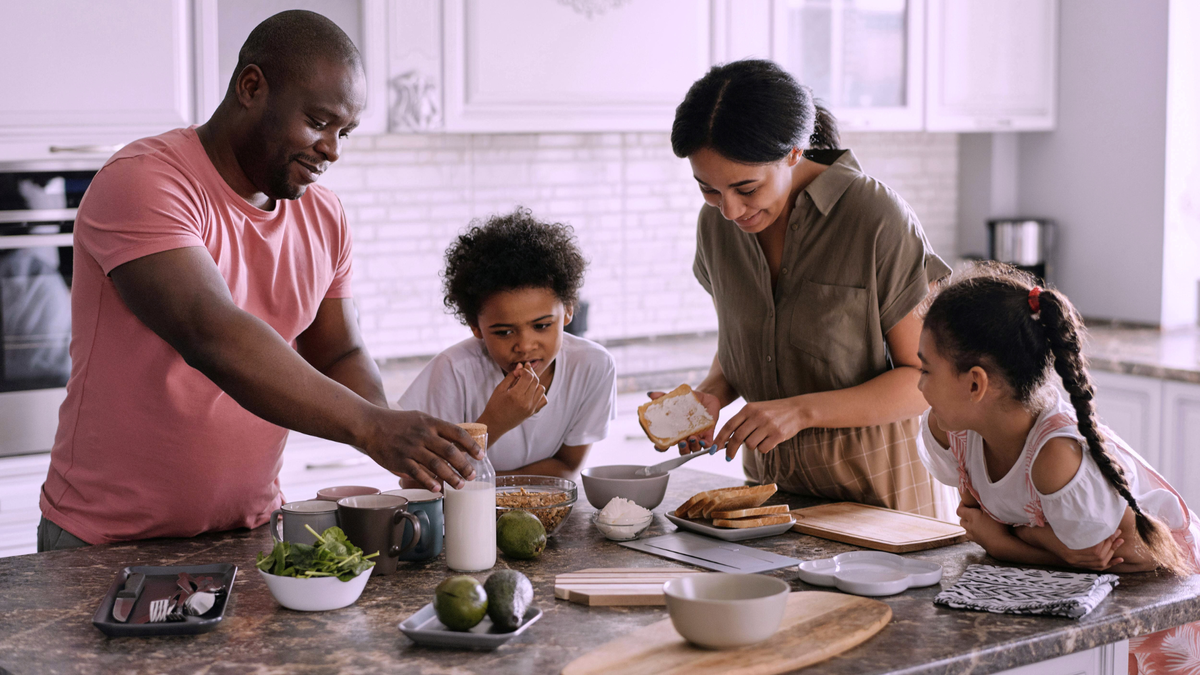
It doesn’t have to be every meal. Even one “phones away” mealtime most days gives you space to actually talk. You can keep it very simple:
- “High, low, and funny” (everyone shares a high point, a low point, and something funny from their day).
- One gratitude each (“I’m glad about…”), without forcing kids to be cheerful if they’ve had a bad day.
3. A short evening reset
Many families are exhausted by the time evening comes, so think tiny:
- Two-minute tidy where everyone picks up five things.
- A quick “tomorrow preview”: “What’s happening tomorrow that we need to remember?”
This helps kids feel a bit more prepared and reduces frantic mornings.
4. Bedtime connection ritual
This doesn’t have to be long or elaborate:
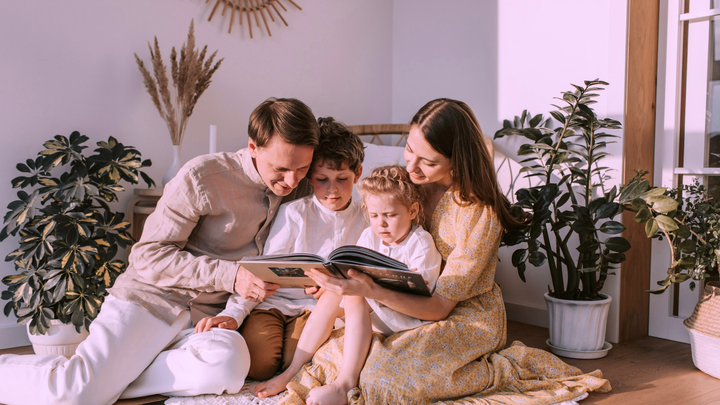
- Reading a short story together
- A “rose, thorn, and bud” (something good, something hard, something you’re looking forward to)
- One calming practice: a few deep breaths, a gentle stretch, or a short calming audio
Kids’ stories and visualizations can turn bedtime into a steady moment where your child hears messages about courage, kindness, and self-belief right before sleep.
Involving Kids in Creating Family Habits
Habits work better when kids feel included, not policed.
You might say:
“Our days have felt a bit rushed lately. I’d love for us to add one or two small things that make our home feel calmer or closer. What do you think would help?”
Kids might surprise you. They might ask for:
- A regular game night (even 20 minutes)
- A shared walk after dinner once in a while
- A “no rush” breakfast day on weekends
- More stories or “talk time” at bed
Let them choose some of the rituals and give them age-appropriate roles:
- “You’re in charge of picking the question of the day.”
- “You can choose the bedtime story on Fridays.”
- “You ring the timer for our 5-minute tidy.”
When kids have ownership, habits feel less like rules and more like “our thing.”
Keeping It Real When Life Is Messy
There will be weeks where everything runs smoothly… and weeks where you’re just getting through.
In busy or stressful times, it helps to use a “tiny version” mindset:
- If you usually read for 15 minutes, read one page.
- If you usually do a walk, step outside for 2 minutes and look at the sky together.
- If you usually do a full check-in at dinner, just ask one question in the car.
The message to your kids (and yourself) becomes:
“Even when things are hard, we still take small care of ourselves and each other.”
That consistency matters more than perfection. Children learn that routines can bend instead of breaking completely, and that they are still worth showing up for, even in chaotic seasons.
If you like structure, you can keep track of a few shared rituals in a simple way—like using a habit tracker, where you and your child can see streaks grow and celebrate small wins together without making it a big performance.
Letting Habits Evolve As Your Kids Grow
Family habits won’t look the same when your child is five as they will when they’re twelve or seventeen—and that’s a good thing. It means your rituals are growing with your family instead of staying frozen in one stage.
Over time, you might:
- Shift from reading picture books to having “check-in chats” on the couch.
- Replace bedtime stories with a weekly walk or hot chocolate conversation.
- Keep the structure (e.g., Sunday evenings together) but change the content (board games, planning the week, watching a show and actually talking about it).
Every so often, you can ask:
- “Which of our family habits still feel good?”
- “Is there something new we want to try?”
- “Is there something that doesn’t fit our life anymore?”
You don’t have to keep every ritual forever. Letting them evolve is part of staying connected to who your kids are now, not just who they used to be.
Growing Together, Not Just Side by Side
It’s easy for family life to become a logistics operation: meals, homework, activities, bed. Habits don’t remove those responsibilities, but they can change the feel of your shared life.
When you:
- Make a little space to check in with each other,
- Protect a couple of small, shared rituals,
- And let kids help shape the routines you live in,
you’re teaching them something precious:
“We belong to each other. We grow together. And even when we’re busy and imperfect, this family is a place where we show up with intention.”
You don’t need to overhaul your whole schedule this week. Just choose one tiny habit that feels doable—a question at dinner, a five-minute Sunday reset, a short story at night—and let it become part of the rhythm of your home.
Those little rhythms are what your kids will carry with them long after they’ve forgotten which days you “got everything right.”