Building Hope in Difficult Seasons (Without Ignoring Reality)

There are seasons in life when “staying positive” feels impossible.
Maybe you’re dealing with a health issue that won’t resolve, a job loss that shook your stability, a relationship that ended, or a long stretch of exhaustion where everything feels a little gray. In times like these, advice like “just think positive” doesn’t help. It can even make things worse, because it suggests that if you’re struggling, you’re somehow doing it wrong.
Hope, in hard seasons, is not about pretending things are fine. It’s about finding a way to keep going without lying to yourself. It’s the quiet belief that while today might be painful or confusing, this moment is not the whole story.
That kind of hope is not a personality trait. It’s something you can nurture, gently, even when life feels heavy.
Hope Isn’t Denial
A lot of people secretly worry that if they allow themselves to feel hopeful, they’re ignoring reality or setting themselves up for disappointment. So they tell themselves, “I won’t expect anything. That way I can’t be let down.”
The problem is that “expect nothing” doesn’t actually protect you from pain, it just drains your energy and motivation to try. You still have to live through the hard things, but without a sense that anything good can come next.
Real hope does not say “everything is okay.” It says:
- “Things are hard and there might still be something worth reaching for.”
- “I don’t know how this will turn out and it’s still worth taking the next step.”
- “This season hurts and it won’t last forever in exactly this form.”
That small “and” is where hope lives.
Naming What Hurts (So You Don’t Have to Carry It Alone)
It’s almost impossible to feel grounded hope if you’re using all your energy just to push feelings down.
One of the most powerful things you can do in a difficult season is simply name what’s happening; to yourself and, if possible, to someone you trust.
That might look like:
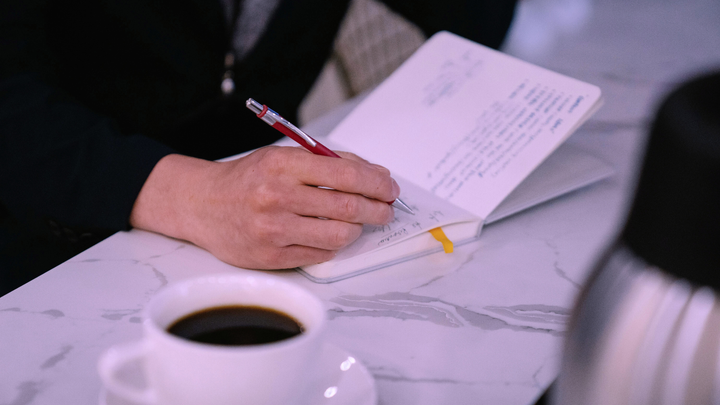
- Writing a few unfiltered lines in a notebook about what feels unfair, frightening, or exhausting.
- Saying out loud, “I am really struggling right now,” instead of pretending you’re fine.
- Admitting, “This is not what I wanted and I don’t know what comes next.”
Putting words around your experience doesn’t make the situation worse. It makes it more contained. Instead of being surrounded by a vague fog of dread, you have a clearer sense of what, exactly, you’re facing.
Short daily reflection prompts can make this easier when you feel too tired to know where to start, because they ask you simple questions your mind can answer even on hard days.
If your pain feels overwhelming or you’ve had thoughts of harming yourself, that’s a sign you deserve more support than self-help alone. Reaching out to a mental health professional, doctor, or crisis service in your area is a hopeful act too: it’s you saying, “My life is worth getting help for.”
Shrinking the Time Frame
In difficult seasons, your brain often jumps straight from “today is awful” to “my whole future will be like this.” That mental leap is understandable, but it’s also paralyzing.
Instead of asking, “How will I fix my life?” you can gently shrink the question:
- “What would make today even 5% more bearable?”
- “What’s one thing I can do in the next hour that’s even slightly kind to myself?”
- “What could make this week feel a tiny bit less heavy?”
Hope grows in these smaller windows. Maybe the answer is:
- Taking a proper shower and putting on fresh clothes.
- Sending one message you’ve been avoiding.
- Eating something nourishing.
- Stepping outside for a few minutes of fresh air.
- Doing one small task that brings your future self a bit of relief.
None of these erase the difficulty. But each one is a quiet signal to yourself: “I am still here. I am still participating in my own life.” That, in itself, is hopeful.
Letting Yourself Notice What Hasn’t Broken
When you’re hurting, your attention naturally zooms in on what’s wrong. Your brain is trying to protect you by focusing on the threat. The problem is, if that’s all you see, the world starts to look completely dark.
Part of building hope is gently widening the frame, not to erase what’s painful, but to include what hasn’t collapsed.
You might ask yourself:
- “What is one thing that is still okay today?”
- “Who or what helped me even a little this week?”
- “Where did I handle something better than I might have in the past?”
Maybe it’s:
- A person who checked in on you.
- A moment you made yourself a proper meal instead of skipping food entirely.
- The fact that you got through a day you were dreading.
- A small laugh you didn’t expect.
This is not about pretending that “others have it worse” or that you should be grateful for everything. It’s simply about allowing your brain to register that your life contains more than only pain—even now.
Sometimes it’s easier to do this with gentle prompts or affirmations that nudge your thinking in a kinder direction. A short line you read each morning, or a quiet audio affirmation (like the ones in Conqur’s Positive Affirmations library) can offer ready-made hopeful sentences when you don’t have the strength to come up with your own.
Borrowing Hope from Outside Yourself
There will be days when you can’t generate hope from inside. On those days, it’s okay to borrow it.
You can borrow hope from:
- People who listen without minimizing what you’re going through.
- Stories of others who lived through long, uncertain seasons and slowly rebuilt.
- Routines that hold you when your mind feels chaotic; making your bed, morning coffee, a walk at the same time each day.
- Words that have carried you before: a note, a message, a line from a book or song that reminds you you’re not alone.
When Small Things Start to Matter Again
One of the subtle signs that hope is growing is that you start to care, even a little, about small things again.
You might:
- Feel a tiny spark of interest in a hobby you dropped.
- Catch yourself planning something a few weeks out.
- Notice that you want your space to feel a bit more like you again.
- Find that you’re able to imagine a day that doesn’t look exactly like this one.
These are not dramatic movie moments. They’re quiet shifts. You don’t need to force them; just notice them when they appear and give yourself credit. They are evidence that something inside you is still reaching forward.
You can support this by slowly reintroducing small, meaningful actions into your routines: a 10-minute walk, a single page of a book, a short visualization where you picture a future version of yourself who is tired but still moving.
Holding Both: Reality and Possibility
Building hope in difficult seasons isn’t about choosing between “everything is terrible” and “everything is fine.” It’s about learning to hold two truths at once:
- This is genuinely hard.
- And still, this is not the end of my story.
You don’t have to feel optimistic all the time. You don’t have to force yourself to be grateful for what hurts. You’re allowed to be tired, angry, or sad and still take actions that support your future.
Hope, here, is not a loud emotion. It’s a repeated choice:
- To tell the truth about your pain.
- To shrink the time frame when the future feels too big.
- To notice what hasn’t broken.
- To borrow strength from people, stories, and small routines.
- To keep taking steps—even small, wobbly ones—toward a life that fits you better than this moment does.
You don’t have to “earn” hope by being positive enough. You can simply allow it to exist alongside everything else you’re feeling, like a quiet light in the corner of the room.
You’re allowed to move slowly. You’re allowed to rest. And even in the hardest season, you are allowed to believe that your story is still unfolding in ways you cannot yet see.